


REPORT: Corvette C7 Coming in 2012 as a 2013 model


Registered User
Joined: Aug 1998
Posts: 511
From: Mill Creek, WA

Registered User
Joined: Oct 2001
Posts: 859
From: AR (PA born and fled)
The one piece spring is actually a plus here because it aids in roll resistance. The car would otherwise require larger anti-roll / sway bars which can create other tuning problems.
READ MORE HERE
ALSO HERE (approx. halfway down the page)
Funny thing with bigger bars is that they can cause the very thing some accuse the one piece leaf of causing (less independence between sides).
While I admit that the Corvette setup suffers from an image problem as well as a lack of understanding, it really is a rather elegant approach. The only advantages an aftermarket coilover setup has is a much broader selection of rates to choose from and less time is needed to swap the springs. Everything else favors the stock transverse leaf.
Last edited by Chewbacca; Aug 13, 2009 at 11:16 AM.

Registered User
Joined: Nov 2001
Posts: 632
From: NC
 I assume that is sarcasm since we are talking about the Corvette.
Registered User
Joined: Aug 2003
Posts: 915
From: Tucson, AZ

Thread Starter
Registered User
Joined: Dec 2002
Posts: 1,505
From: Charleston, WV
Here are a few chops & an older article...
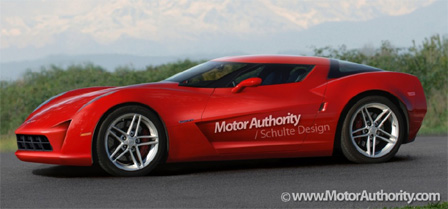
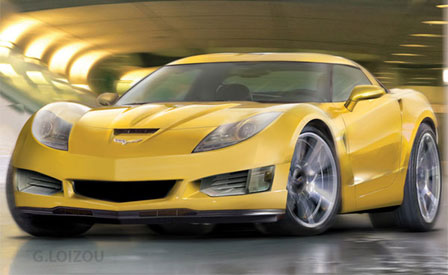

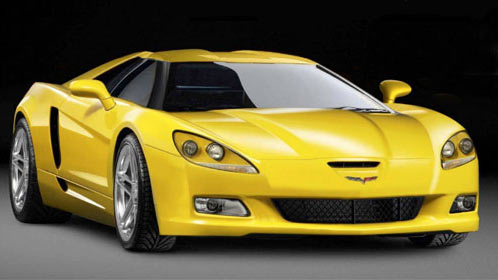
http://www.corvetteblogger.com/index...on-the-Horizon
There is some more stuff here:
http://www.corvetteblogger.com/index...1ECC1208911BEF
Over the last few years, the mantra at Corvette has been more performance, more horsepower. But the passage of the new energy bill that raises the CAFE standards to an average of 35 mpg will undoubtedly force GM's engineers to rethink performance while pursuing economy first. The results will be a lighter, greener Corvette that will not only survive the 35 mpg standard, but should thrive in it as well.
The standard Corvette coupe and convertible models already get a highly respectable 28 mpg highway average despite being powered by the 6.2 liter 430 hp LS3. With its fiberglass panels and hydroformed aluminum frame, the current Corvette already weighs in at a lean 3200 pounds. According to Tom Wallace, GM's Performance Vehicle Line Executive, the future Corvette will be a sports car where fuel economy and a reduced carbon footprint can coexist with performance as long as engineers pay attention to the ever important weight to horsepower ratio.
Wallace won't talk specifics about the C7 Corvette, but he told Automotive News that if the Corvette's weight was dropped 300 to 400 pounds and was powered by a 4.7 Liter V8 with about 150 less hp than the current LS3, the weight to horsepower ratio is essentially the same as the current standard C6 Corvette.
While the Corvette ZR1 makes extensive use of carbon fiber as a weight saving material, the cost is currently prohibitive in the standard models. But that could change by the time the C7 is developed.
It's also possible that by the year 2012 when the new C7 Corvette is expected that we will see the next generation of fuel efficient engines that utilize both gasoline and ethanol. With the trickle-down effect that Corvette Racing has on its regular production-bred siblings, its a natural evolution for there to be an E85 powered Corvette coming directly from the assembly plant at Bowling Green. Corvette Racing tells us that ethanol based fuel has a higher octane rating so the combination of the new engines powered by ethanol combined with a lighter body may get Corvette close to the 35 mpg highway average.
Two other factors help Corvette as well. First, the amount of Corvettes produced in recent years averages roughly 35,000 cars compared to the nearly 4 million GM sells domestically, so the impact of the Corvette's highway MPG figure is smaller than that of one of GM's mass-produced vehicles. Secondly, GM's investment in alternative fuel solutions and new products like the Chevy Volt are likely to increase the automaker's average significantly if the market is there to support them.
Corvette enthusiasts may have to swallow the reduced horsepower pill like we had to with the C3 Corvettes. The good news is that unlike the Seventies, GM won't simply cut performance to increase mileage standards. Performance will always be one of the governing covenants of the Corvette, and with the looming changes on the horizon, there will be room for a green Corvette.
The standard Corvette coupe and convertible models already get a highly respectable 28 mpg highway average despite being powered by the 6.2 liter 430 hp LS3. With its fiberglass panels and hydroformed aluminum frame, the current Corvette already weighs in at a lean 3200 pounds. According to Tom Wallace, GM's Performance Vehicle Line Executive, the future Corvette will be a sports car where fuel economy and a reduced carbon footprint can coexist with performance as long as engineers pay attention to the ever important weight to horsepower ratio.
Wallace won't talk specifics about the C7 Corvette, but he told Automotive News that if the Corvette's weight was dropped 300 to 400 pounds and was powered by a 4.7 Liter V8 with about 150 less hp than the current LS3, the weight to horsepower ratio is essentially the same as the current standard C6 Corvette.
While the Corvette ZR1 makes extensive use of carbon fiber as a weight saving material, the cost is currently prohibitive in the standard models. But that could change by the time the C7 is developed.
It's also possible that by the year 2012 when the new C7 Corvette is expected that we will see the next generation of fuel efficient engines that utilize both gasoline and ethanol. With the trickle-down effect that Corvette Racing has on its regular production-bred siblings, its a natural evolution for there to be an E85 powered Corvette coming directly from the assembly plant at Bowling Green. Corvette Racing tells us that ethanol based fuel has a higher octane rating so the combination of the new engines powered by ethanol combined with a lighter body may get Corvette close to the 35 mpg highway average.
Two other factors help Corvette as well. First, the amount of Corvettes produced in recent years averages roughly 35,000 cars compared to the nearly 4 million GM sells domestically, so the impact of the Corvette's highway MPG figure is smaller than that of one of GM's mass-produced vehicles. Secondly, GM's investment in alternative fuel solutions and new products like the Chevy Volt are likely to increase the automaker's average significantly if the market is there to support them.
Corvette enthusiasts may have to swallow the reduced horsepower pill like we had to with the C3 Corvettes. The good news is that unlike the Seventies, GM won't simply cut performance to increase mileage standards. Performance will always be one of the governing covenants of the Corvette, and with the looming changes on the horizon, there will be room for a green Corvette.
There is some more stuff here:
http://www.corvetteblogger.com/index...1ECC1208911BEF

Registered User
Joined: Dec 2006
Posts: 1,406
From: Philaduhphia
you can do split windows as long as the split(bodywork) isn't too large. could also make replacement alot easier/cheaper as well.
im all for a smaller V8. both in size and in power. i dont really need more than 300hp or 300ft-lbs of torque at their respective peaks. my insurance rates will enjoy it very much so as well. i looked it up and it would be $1000 for 6months for me to insure a new Camaro SS. yeah, that bitchin 6.2L really helps in stop and go traffic.
ima look into that shortening of dimensions as expressed earlier. a new Z28 Camaro could be on the way with a TRUE 305(302?) engine.
im all for a smaller V8. both in size and in power. i dont really need more than 300hp or 300ft-lbs of torque at their respective peaks. my insurance rates will enjoy it very much so as well. i looked it up and it would be $1000 for 6months for me to insure a new Camaro SS. yeah, that bitchin 6.2L really helps in stop and go traffic.
ima look into that shortening of dimensions as expressed earlier. a new Z28 Camaro could be on the way with a TRUE 305(302?) engine.



Registered User
Joined: Dec 2000
Posts: 8,504
From: Ohio
There is absolutely no way on earth they are going to put a bar in the middle of the back window which blocks visibility in a car that is so purpose oriented, it shunned the traditional pop-up headlamps in the last re-do to reduce weight and wind drag when they were up.
No way, no how. They won't do it.
No way, no how. They won't do it.

Registered User
Joined: Jan 2000
Posts: 10,285
From: Albany, NY
There is absolutely no way on earth they are going to put a bar in the middle of the back window which blocks visibility in a car that is so purpose oriented, it shunned the traditional pop-up headlamps in the last re-do to reduce weight and wind drag when they were up.
No way, no how. They won't do it.
No way, no how. They won't do it.

Registered User
Joined: Aug 2000
Posts: 6,165
From: Sterling Heights, MI
There is absolutely no way on earth they are going to put a bar in the middle of the back window which blocks visibility in a car that is so purpose oriented, it shunned the traditional pop-up headlamps in the last re-do to reduce weight and wind drag when they were up.
No way, no how. They won't do it.
No way, no how. They won't do it.

Registered User
Joined: Mar 2004
Posts: 1,503
From: BFE, Ohio
you can do split windows as long as the split(bodywork) isn't too large. could also make replacement alot easier/cheaper as well.
im all for a smaller V8. both in size and in power. i dont really need more than 300hp or 300ft-lbs of torque at their respective peaks. my insurance rates will enjoy it very much so as well. i looked it up and it would be $1000 for 6months for me to insure a new Camaro SS. yeah, that bitchin 6.2L really helps in stop and go traffic.
ima look into that shortening of dimensions as expressed earlier. a new Z28 Camaro could be on the way with a TRUE 305(302?) engine.
im all for a smaller V8. both in size and in power. i dont really need more than 300hp or 300ft-lbs of torque at their respective peaks. my insurance rates will enjoy it very much so as well. i looked it up and it would be $1000 for 6months for me to insure a new Camaro SS. yeah, that bitchin 6.2L really helps in stop and go traffic.
ima look into that shortening of dimensions as expressed earlier. a new Z28 Camaro could be on the way with a TRUE 305(302?) engine.

Registered User
Joined: Nov 1998
Posts: 3,252
From: Knoxville, TN
If torque-to-weight is so important, then why doesn't a 330 lb/ft L98 3rd Gen outrun a 325 lb/ft LT1 4th Gen, and at least come really close to a 335 lb/ft LS1 4th Gen? Was the 340 lb/ft LT1 C4 Corvette just barely slower than the 350 lb/ft LS1 C5 Corvette? Was all the difference weight?
Peak torque numbers as a function of how well a performance car will....well....perform just aren't meaningful. And when determining how quick/fast a car will be, torque-to-weight is pretty much useless....unless of course you know torque at rpm, at which point we can calculate something called Horsepower (or just "power")....at which point it becomes quite useful.
Now....how a car FEELS on the street - especially from an off-idle punch, and most especially with MPG-friendly gearing.....that's a different story. Of course, as a famous drag racer once said: "The seat of the pants is the world's biggest liar". He was right.
I hope I didn't make an unintentional spelling or grammer error.
Last edited by Bob Cosby; Aug 13, 2009 at 03:58 PM.

Registered User
Joined: Aug 2002
Posts: 3,650
From: Indianapolis, IN

In reference to the quoted article above:
If the current Vette dropped 400 lbs, it would be at 2800. Let's be generous and say 2750. If the engine were now a 4.7L (or whatever) with 150 hp less than the LS3, you are at 286. Let's be generous and say 300 hp. That is still 9.2 lb/hp, which is NOT as good as the currrent base Vette (~3200 / 436 = 7.34 lb / hp).
I'm all about reducing weight, but the Vette had BETTER not drop 150 hp. I don't need the flagship American sports car reverting back to LT1 power levels. If the car were to drop to 2800 lbs and go back to 400 hp (LS2 levels), you'd be at 7 lb/hp, which is better than the current LS3 car but not as good as the 6.3 lb/hp of the LS7 Z06). That would be cool. Even better, since the engines weigh the same regardless, how about we stay at 450 hp and drop to 2800 lbs?

That would be better than Z06 in the power-to-weight department, along with far superior fuel efficiency, I'd wager. Dropping 400 lbs would be a boon for fuel efficiency, as would the addition of DI. And I'm sure 450 hp would be a cakewalk with DI from 6.2L (or less), since the LS3 is basically there already.

