


When to use motor plates?


Thread Starter
Registered User
Joined: Dec 2000
Posts: 978
From: 18036
When to use motor plates?
When does a build up require motor plates? Is there a hp level? Packaging limitations? etc... I know some folks use them and some don't. Also, what about driving a vehicle on the street w/ motor plates. Is that an issue? Any info would be greatly appreciated.
Thanks,
Steve.
Thanks,
Steve.
Last edited by RBE17; Jan 29, 2008 at 02:38 PM.

Registered User
Joined: Mar 2000
Posts: 2,037
From: 51°N 114°W, 3500' elevation
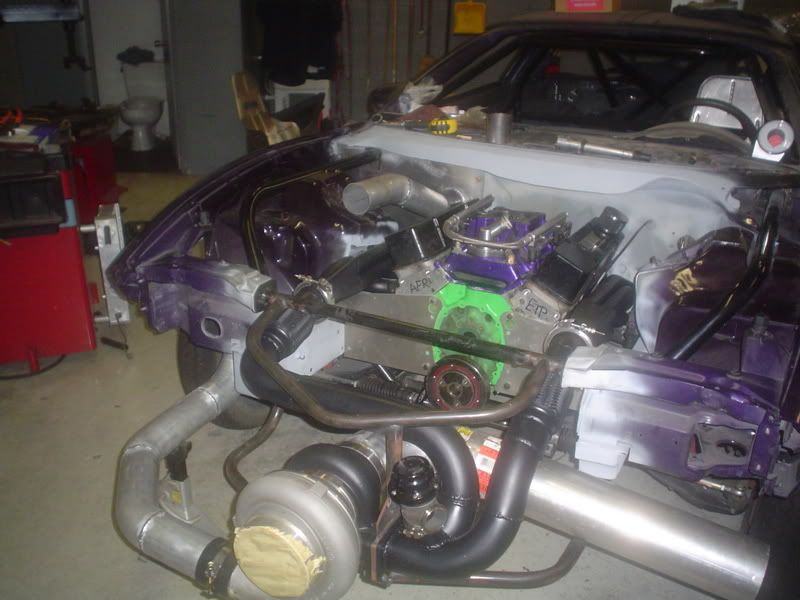
You can use solid motor mounts for as long as you want. Motor plates are mainly for clearance issues. When I installed a tubular k-member, I ordered it without engine mount brackets because I was already using a front motor plate. I have lots of room on the sides of the engine for headers etc.
I don't have a mid plate mainly because I just don't have to room to install one. Mid plates are common on a full tube chassis. I use a polyurethane tranny mount and the engine needs a engine limiter to keep it from moving forward or backward. Using solid engine mounts, you don't need the limiter.
I don't have a mid plate mainly because I just don't have to room to install one. Mid plates are common on a full tube chassis. I use a polyurethane tranny mount and the engine needs a engine limiter to keep it from moving forward or backward. Using solid engine mounts, you don't need the limiter.
Thread Starter
Registered User
Joined: Dec 2000
Posts: 978
From: 18036

Thread Starter
Registered User
Joined: Dec 2000
Posts: 978
From: 18036
 Brian developed these years ago and they are used by many folks. I just curious when you should use them. As far as doubting the use, I have none. Years of other folks using them successfully is enough for me.

Banned
Joined: Oct 2006
Posts: 4,970
From: Goochland, Va.
The main benifit is clearance.....alot of time the motor mount bosses are used for limiters of some sort, but you have alot mor header clearance.
The chassis gets a better distributed load from the tq. and in an accident its easy for the engine to separate from the chassis. I have never seen one come out of a door car anyway. But those are some things I remember from a class I went to. Probly all BS.
How fast are you going? You probly don't need one
The chassis gets a better distributed load from the tq. and in an accident its easy for the engine to separate from the chassis. I have never seen one come out of a door car anyway. But those are some things I remember from a class I went to. Probly all BS.
How fast are you going? You probly don't need one

Moderator
Joined: Dec 1969
Posts: 10,745
From: Buffalo, New York
The main benifit is clearance.....alot of time the motor mount bosses are used for limiters of some sort, but you have alot mor header clearance.
The chassis gets a better distributed load from the tq. and in an accident its easy for the engine to separate from the chassis. I have never seen one come out of a door car anyway. But those are some things I remember from a class I went to. Probly all BS.
How fast are you going? You probly don't need one
The chassis gets a better distributed load from the tq. and in an accident its easy for the engine to separate from the chassis. I have never seen one come out of a door car anyway. But those are some things I remember from a class I went to. Probly all BS.
How fast are you going? You probly don't need one
The Camaro ran a best of 10.02 @ 144 with stock motor mounts. My race car is a tube car and uses motor plates. I have a buddy with a 5.0 running mid eights at ~160 with solid mounts, no plate. His Mustang haa roll cage extensions to the shock towers but nothing else tying the motor to the "frame" other than the mounts. The Camaro does not have them. I am saying that I am not sure what a motorplate would add?? I can see that it is more rigid, just not sure that is going to make it any faster.
Rich
Last edited by rskrause; Jan 31, 2008 at 12:05 PM.
Thread Starter
Registered User
Joined: Dec 2000
Posts: 978
From: 18036
The main benifit is clearance.....alot of time the motor mount bosses are used for limiters of some sort, but you have alot mor header clearance.
The chassis gets a better distributed load from the tq. and in an accident its easy for the engine to separate from the chassis. I have never seen one come out of a door car anyway. But those are some things I remember from a class I went to. Probly all BS.
How fast are you going? You probly don't need one
The chassis gets a better distributed load from the tq. and in an accident its easy for the engine to separate from the chassis. I have never seen one come out of a door car anyway. But those are some things I remember from a class I went to. Probly all BS.
How fast are you going? You probly don't need one
Concerning the car being more rigid, that is for sure. Anytime flex is eliminated the possibility of going faster is there.
As far as seeing a motor come out of a door car, I've seen it in really bad accidents on the street, but never at the track.

Administrator
Joined: Nov 1998
Posts: 71,110
From: Hell was full so they sent me to NJ
One thought... the motor plate allows you to mount any "accessories" rigidly to the plate, rather than on the front of the engine - alternator, vacuum pump, blower, etc. Simplifies life to some extent.
http://www.injuneer.com/images/photo.../DCP03825a.jpg
http://www.injuneer.com/images/photo.../DCP03825a.jpg

Registered User
Joined: Sep 2004
Posts: 1,872
From: Lantana, TX
Like has already been posted it gives a ton more clearance for oil pan/headers and you can mount accessories to it so you don't have to worry a lot about having the right brackets. In my BBC T/A I thought about it but since I'm not running an accessories other than an alternator I didn't worry about it. I didn't know about the other stuff Mdacton posted.
Banned
Joined: Oct 2006
Posts: 4,970
From: Goochland, Va.
One thought... the motor plate allows you to mount any "accessories" rigidly to the plate, rather than on the front of the engine - alternator, vacuum pump, blower, etc. Simplifies life to some extent.
http://www.injuneer.com/images/photo.../DCP03825a.jpg
http://www.injuneer.com/images/photo.../DCP03825a.jpg
Its easier to get the engine out also.
I won't say you "need" it to run low 9's but it would be easier.
Chevrolets really don't have header problems like alot of other cars do....most chevy's just shoot doen each side. Some fords and chrystlers have pipes going all over the place