


95z28_m6's Turbo build


Thread Starter
Registered User
Joined: Feb 2002
Posts: 5,645
From: Bridgewater, MA


Registered User
Joined: Oct 2003
Posts: 1,177
From: Nebraska
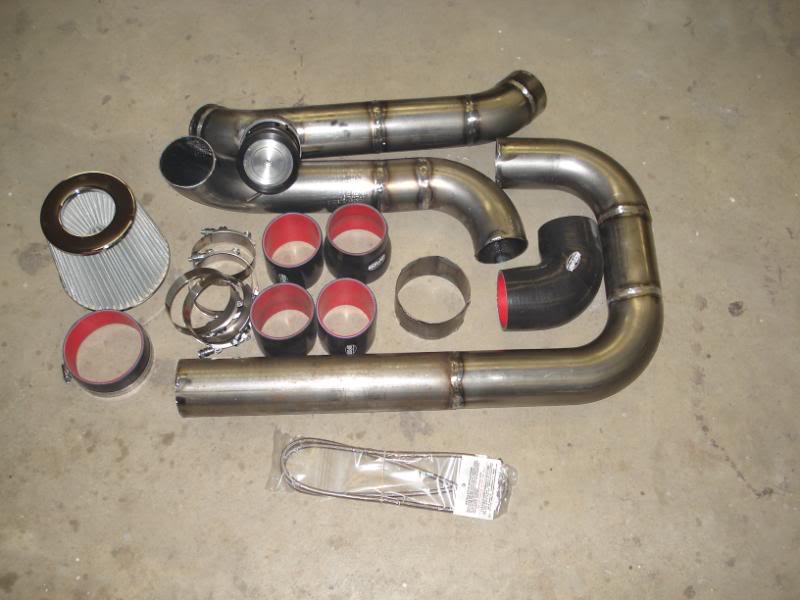
Are you still miggin? if so thats looking real good looks like u turned ur heat way down. Your welds are def improving. Think there is any negative affects using steel piping vs alum for the cold side if it was just painted?

Registered User
Joined: Aug 2006
Posts: 3,705
From: Kansas
a) weight, a cube foot of steel weighs 467 lbs, aluminum is only 168
b) aluminum dissipates heat MUCH faster than steel
Thread Starter
Registered User
Joined: Feb 2002
Posts: 5,645
From: Bridgewater, MA
Like Adam said, steel will corrode versus aluminum (rusting), and steel is heavier. Aluminum dissipated heat better as well.

Registered User
Joined: Aug 2006
Posts: 1,497
From: Orem, UT
Aluminum also sinks heat very efficiently.
High underhood temperatures can ADD heat to the cooler charge air. In the front of the car (think FMIC) aluminum pipe would run cold, in the engine bay it could run hot. In such a case you can see why piping material with high thermal conductivity could be worse.
Last edited by MikeGyver; Mar 25, 2009 at 12:29 AM.
Registered User
Joined: Aug 2006
Posts: 3,705
From: Kansas
More pertainent, aluminum is much more expensive and difficult to work with. Requires an AC TIG welder.
Aluminum also sinks heat very efficiently.
High underhood temperatures can ADD heat to the cooler charge air. In the front of the car (think FMIC) aluminum pipe would run cold, in the engine bay it could run hot. In such a case you can see why piping material with high thermal conductivity could be worse.
Aluminum also sinks heat very efficiently.
High underhood temperatures can ADD heat to the cooler charge air. In the front of the car (think FMIC) aluminum pipe would run cold, in the engine bay it could run hot. In such a case you can see why piping material with high thermal conductivity could be worse.
You could get the radiant heat-reflectors and put around the aluminum piping to help, but that looks kind of ugly. Ceramic coating the hotside will also help.
im wondering what kind of gains we could get with a aluminum-copper intercooler. Copper is the second best thermal conductor behind silver,a luminum is behind copper so i think we could gain something there.
Jon, you have your engineering degree, get to work!

theres so much cool stuff we could use for cars, now how pratical is another story as the costs would go up tremendously probably.
example, your talking about the aluminum gaining heat fast in the engine bay....use inconel or any other nickel based alloy as it does not transfer heat for crap.

Registered User
Joined: Mar 2003
Posts: 433
From: Athens, GA
Stainless steel does not tranfer heat as quickly as aluminum and cools rapidly. Downside is cost and it's a strong metal. Any cutting or bending will not be easy compared to steel or aluminum. If you want pretty though, I'd take ss over aluminum unless you need lightweight.

Registered User
Joined: Jan 2001
Posts: 657
From: Farmington Hills, MI
I would imagine that underhood temp is much less than intake charge temp when moving. If that's the case then aluminum would reduce charge temp compared to steel because the HT coeff is greater. It would depend on which temp is greater - the gas in the pipe, or the atm. Heat moves from hot to cold.
This discussion actually fits well with the one on hot side plumbing. We want to retain heat in the hotside. And we want to remove heat from the cold side.
This discussion actually fits well with the one on hot side plumbing. We want to retain heat in the hotside. And we want to remove heat from the cold side.
Registered User
Joined: Aug 2006
Posts: 1,497
From: Orem, UT
My air intake temps under boost were like 15 degrees above ambient. Much cooler than the underhood temps.
My intercooler outlet feels ice cold, and that same pipe going into the throttle body elbow is very warm to the touch (due to underhood heat saturation).
Heat simply moves to a colder region. In this case from the engine bay, through the intake pipe, and into the charge air.
A ceramic heat barrier coating like HPC would be very beneficial when used on the intercooler outlet pipe to the intake elbow. After the air leaves the intercooler and travels into the engine bay, it's obviously only going to heat up, not cool down further.
My intercooler outlet feels ice cold, and that same pipe going into the throttle body elbow is very warm to the touch (due to underhood heat saturation).
Heat simply moves to a colder region. In this case from the engine bay, through the intake pipe, and into the charge air.
A ceramic heat barrier coating like HPC would be very beneficial when used on the intercooler outlet pipe to the intake elbow. After the air leaves the intercooler and travels into the engine bay, it's obviously only going to heat up, not cool down further.

Registered User
Joined: Jan 2006
Posts: 291
Great work! you keep getting better and better and for anyone considering buying one of his kits...He is by far one of the best people to do business with. Not that I would know or anything ; ) Its a shame I need to sell mine now. = (

Thread
Thread Starter
Forum
Replies
Last Post
cmsmith
2010 - 2015 Camaro News, Sightings, Pictures, and Multimedia
0
Sep 14, 2015 09:09 PM
NewsBot
2010 - 2015 Camaro News, Sightings, Pictures, and Multimedia
0
Sep 14, 2015 02:02 AM
LeftoverChinese
Parts For Sale
0
Jul 23, 2015 03:57 PM