


Profit!!


Registered User
Joined: Feb 1999
Posts: 2,947
From: Springfield,OH. U.S.A.
Originally Posted by SSbaby:
GM still has to negotiate a new contract with the UAW at the latter part of the year. That would be more important than any profit/loss statement issued by GM atm.
GM still has to negotiate a new contract with the UAW at the latter part of the year. That would be more important than any profit/loss statement issued by GM atm.
I believe many would make a small concession in wages for better coverage. And many of GM workers' family members retired from GM adds to that. And as far as a modest increase in pension $$ helping them cover medical needs, is like spitting on a fire, it'll just vaporize.


Banned
Joined: Mar 2001
Posts: 1,938
Perhaps a more comprehensive veiw of GM's 4th. Qtr. Profit
GM Declares No Victories Yet - Despite a Modest Profit, North America Operations Still Drain Auto Maker
From The Wall Street Journal, March 15, 2007 - By JOHN D. STOLL and NEAL E. BOUDETTE
This article speaks a bit more eloquently that I did a few posts ago regarding GM’s continued exposure due to their sale of and their continuing part ownership of GMAC…it also indicates that the UAW is going to have to give up a lot more than modest concessions during the contract negotiations later this year.
From The Wall Street Journal, March 15, 2007 - By JOHN D. STOLL and NEAL E. BOUDETTE
Despite reporting a net profit in the fourth quarter, General Motors Corp. is still struggling to turn around its core North American automotive business and is seeing a financial cushion slip away as its former finance arm continues to suffer from the subprime-mortgage market's fallout.
GM raked in a record $207 billion in revenue last year but still lost $2 billion, underscoring the depth of the problems facing its U.S. auto operations. In an interview, GM Vice Chairman Frederick "Fritz" Henderson said some rival car makers such as Toyota Motor Corp. earn a return on sales of 5% or more. At the 5% level, GM's 2006 profit would have been more than $10 billion.
"While an improvement, our results still are not at an acceptable level," Mr. Henderson said. GM, he said, has much more cost cutting to do, both in North America and Europe. In a statement, GM Chairman and Chief Executive Officer Rick Wagoner said that "nobody at GM is declaring victory."
Investors bid down GM shares yesterday, despite the company's unspecific forecast of "improved earnings" for 2007, reflecting concern that the world's largest auto maker by sales volume still faces significant challenges, particularly in North America. GM shares were down 26 cents to $30.25 in 4 p.m. New York Stock Exchange composite trading after hitting their lowest level since Jan. 4 during the session.
Despite billions of dollars in cost cuts and the launch of new models, including the high-volume, high-margin Chevrolet Silverado pickup truck, GM reported a $14 million fourth-quarter loss in its North American auto operations, compared with a restated loss of $1.4 billion in the fourth quarter of 2005.
While analysts yesterday applauded the improvement in 2006 performance compared with GM's restated $10.4 billion 2005 loss, investors have been looking past yesterday's report, which was delayed for more than six weeks because of accounting problems. GM restated annual results going back to 2002.
Mr. Wagoner's turnaround strategy will face critical tests this year. This fall, GM will negotiate a new master labor agreement for U.S. hourly workers with the United Auto Workers. GM and its cross-town rivals Ford Motor Co. and DaimlerChrysler AG's Chrysler Group are losing money in North America and are hoping to agree to terms in a new contract that will enable them to slash costs, especially in the area of union and retiree health care. Mr. Henderson, in an interview yesterday, said GM must reduce U.S. health-care spending, which it expects will total $4.7 billion this year.
Mr. Henderson declined to say what GM is hoping to achieve in the talks, but he said "health care remains a critical factor in our ability to generate cash." GM had positive cash flow of $300 million in the fourth quarter but for all of 2006, the company burned through $3.8 billion.
"At this point, we think attention shifts to whether UAW concessions can take earnings and momentum in the stock to the next level," Goldman Sachs auto analyst Robert Barry said in a note to investors.
Without major changes to the contract, GM's sprawling North American unit -- which still accounts for nearly a quarter of all car and truck sales in the U.S. and sells more profit-rich trucks and SUVs than any other auto maker -- may be a break-even operation, at best, analysts say.
"It's incrementally unclear...whether GM can sustainably return North American Auto to meaningful profitability without material further UAW concessions," Bear Stearns auto analyst Peter Nesvold said.
Mr. Henderson said additional cost cuts outside of health care, a projected rebound in the U.S. market and expected moderation in raw-material prices could enable the company to pull its North American operations into the black.
Separately, GM faces a challenge in containing mounting losses from lending to high-risk subprime borrowers at GMAC Financial Services, the financing unit in which GM sold a majority stake late last year. GM still owns a 49% stake in GMAC, formerly General Motors Acceptance Corp. Mr. Henderson said yesterday that the problems in GMAC's mortgage business aren't a one-quarter issue, and he said it is still unclear what the impact of the retrenchment in the mortgage markets will be -- either on GMAC or on demand for GM's cars.
Above all, GM's North American operations need to sell more vehicles. GM North America production fell 13% in the quarter as the company cut back on low-margin sales to rental fleets and tried to reduce spending on incentives, damping vehicle sales. GM sales remained sluggish in January but perked up in February after it increased incentives. GM will kick off today a new March marketing campaign featuring no-interest financing deals for three years and $1,000 discounts on certain models.
GM's fourth-quarter net profit was made possible mainly by profit from operations in Asia and Latin America. The latest results included net gains of $770 million, primarily attributable to the sale of 51% of GMAC.
GMAC was a financial drain on GM during the quarter, reducing its financial results by $284 million. The lending business was hit hard by weakness in its subprime-lending business at the ResCap mortgage arm. ResCap had long been considered the jewel of GMAC. As a result of the collapse in ResCap's profit, GM has agreed to pay back $1
billion to GMAC's buyer, Cerberus Capital Management, a payment the auto maker will book in the first quarter.
Mr. Henderson said he expects GMAC to remain under pressure "through 2007," but he declined to forecast beyond the current year.
GM raked in a record $207 billion in revenue last year but still lost $2 billion, underscoring the depth of the problems facing its U.S. auto operations. In an interview, GM Vice Chairman Frederick "Fritz" Henderson said some rival car makers such as Toyota Motor Corp. earn a return on sales of 5% or more. At the 5% level, GM's 2006 profit would have been more than $10 billion.
"While an improvement, our results still are not at an acceptable level," Mr. Henderson said. GM, he said, has much more cost cutting to do, both in North America and Europe. In a statement, GM Chairman and Chief Executive Officer Rick Wagoner said that "nobody at GM is declaring victory."
Investors bid down GM shares yesterday, despite the company's unspecific forecast of "improved earnings" for 2007, reflecting concern that the world's largest auto maker by sales volume still faces significant challenges, particularly in North America. GM shares were down 26 cents to $30.25 in 4 p.m. New York Stock Exchange composite trading after hitting their lowest level since Jan. 4 during the session.
Despite billions of dollars in cost cuts and the launch of new models, including the high-volume, high-margin Chevrolet Silverado pickup truck, GM reported a $14 million fourth-quarter loss in its North American auto operations, compared with a restated loss of $1.4 billion in the fourth quarter of 2005.
While analysts yesterday applauded the improvement in 2006 performance compared with GM's restated $10.4 billion 2005 loss, investors have been looking past yesterday's report, which was delayed for more than six weeks because of accounting problems. GM restated annual results going back to 2002.
Mr. Wagoner's turnaround strategy will face critical tests this year. This fall, GM will negotiate a new master labor agreement for U.S. hourly workers with the United Auto Workers. GM and its cross-town rivals Ford Motor Co. and DaimlerChrysler AG's Chrysler Group are losing money in North America and are hoping to agree to terms in a new contract that will enable them to slash costs, especially in the area of union and retiree health care. Mr. Henderson, in an interview yesterday, said GM must reduce U.S. health-care spending, which it expects will total $4.7 billion this year.
Mr. Henderson declined to say what GM is hoping to achieve in the talks, but he said "health care remains a critical factor in our ability to generate cash." GM had positive cash flow of $300 million in the fourth quarter but for all of 2006, the company burned through $3.8 billion.
"At this point, we think attention shifts to whether UAW concessions can take earnings and momentum in the stock to the next level," Goldman Sachs auto analyst Robert Barry said in a note to investors.
Without major changes to the contract, GM's sprawling North American unit -- which still accounts for nearly a quarter of all car and truck sales in the U.S. and sells more profit-rich trucks and SUVs than any other auto maker -- may be a break-even operation, at best, analysts say.
"It's incrementally unclear...whether GM can sustainably return North American Auto to meaningful profitability without material further UAW concessions," Bear Stearns auto analyst Peter Nesvold said.
Mr. Henderson said additional cost cuts outside of health care, a projected rebound in the U.S. market and expected moderation in raw-material prices could enable the company to pull its North American operations into the black.
Separately, GM faces a challenge in containing mounting losses from lending to high-risk subprime borrowers at GMAC Financial Services, the financing unit in which GM sold a majority stake late last year. GM still owns a 49% stake in GMAC, formerly General Motors Acceptance Corp. Mr. Henderson said yesterday that the problems in GMAC's mortgage business aren't a one-quarter issue, and he said it is still unclear what the impact of the retrenchment in the mortgage markets will be -- either on GMAC or on demand for GM's cars.
Above all, GM's North American operations need to sell more vehicles. GM North America production fell 13% in the quarter as the company cut back on low-margin sales to rental fleets and tried to reduce spending on incentives, damping vehicle sales. GM sales remained sluggish in January but perked up in February after it increased incentives. GM will kick off today a new March marketing campaign featuring no-interest financing deals for three years and $1,000 discounts on certain models.
GM's fourth-quarter net profit was made possible mainly by profit from operations in Asia and Latin America. The latest results included net gains of $770 million, primarily attributable to the sale of 51% of GMAC.
GMAC was a financial drain on GM during the quarter, reducing its financial results by $284 million. The lending business was hit hard by weakness in its subprime-lending business at the ResCap mortgage arm. ResCap had long been considered the jewel of GMAC. As a result of the collapse in ResCap's profit, GM has agreed to pay back $1
billion to GMAC's buyer, Cerberus Capital Management, a payment the auto maker will book in the first quarter.
Mr. Henderson said he expects GMAC to remain under pressure "through 2007," but he declined to forecast beyond the current year.

Registered User
Joined: Dec 1969
Posts: 1,911
From: Southern California (SoCal)
[SIZE="2"]GMAC was a financial drain on GM during the quarter, reducing its financial results by $284 million. The lending business was hit hard by weakness in its subprime-lending business at the ResCap mortgage arm. ResCap had long been considered the jewel of GMAC. As a result of the collapse in ResCap's profit, GM has agreed to pay back $1
billion to GMAC's buyer, Cerberus Capital Management, a payment the auto maker will book in the first quarter.
billion to GMAC's buyer, Cerberus Capital Management, a payment the auto maker will book in the first quarter.
This all seems a little to much like Deja vu from a thread from 2 years ago.
http://web.camaross.com/forums/showt...highlight=gmac
Last edited by johnsocal; Mar 15, 2007 at 03:19 PM.
Registered User
Joined: Feb 1999
Posts: 2,947
From: Springfield,OH. U.S.A.
"It's incrementally unclear...whether GM can sustainably return North American Auto to meaningful profitability without material further UAW concessions," Bear Stearns auto analyst Peter Nesvold said.
Mr. Henderson said additional cost cuts outside of health care, a projected rebound in the U.S. market and expected moderation in raw-material prices could enable the company to pull its North American operations into the black.
Mr. Henderson said additional cost cuts outside of health care, a projected rebound in the U.S. market and expected moderation in raw-material prices could enable the company to pull its North American operations into the black.
To me the BIG hurdle to overcome for 2007 looks to be the Sub-Prime lending issue:
Separately, GM faces a challenge in containing mounting losses from lending to high-risk subprime borrowers at GMAC Financial Services, the financing unit in which GM sold a majority stake late last year. GM still owns a 49% stake in GMAC, formerly General Motors Acceptance Corp. Mr. Henderson said yesterday that the problems in GMAC's mortgage business aren't a one-quarter issue, and he said it is still unclear what the impact of the retrenchment in the mortgage markets will be -- either on GMAC or on demand for GM's cars.
Rick Wagner's comments;
"We needed 2006 to be a big year, and it was," GM Chairman and CEO Rick Wagoner said. "Our performance last year reflects the significant progress we've made toward transforming GM into a more competitive, global business focused on long-term, sustainable success. The improvement is a credit to our employees, union partners, dealers and suppliers worldwide. It's also validation that our strategy is working, and faster than many people thought possible.
Last edited by 90rocz; Mar 15, 2007 at 11:00 PM.
Registered User
Joined: Feb 1999
Posts: 2,947
From: Springfield,OH. U.S.A.
Wall Street has begun wondering if GM is overplaying the health card. "Even if GM solves their medical-cost disadvantage," says Standard & Poor's analyst Scott Sprinzen, "they will still not be another Toyota." And some question whether Wagoner's tough talk doesn't help because it simply backs the union into a corner. Says veteran analyst Maryann Keller, "It makes it difficult for the union to do anything without looking like the bad guys."
A roadblock to any deal is the union's feeling that GM brass is not sharing in the sacrifice. Wagoner just took a $2.5 million bonus($10mil.salary) (while Bill Ford swore off compensation until his company is fixed). And GM shareholders still receive $1.1 billion in yearly dividends. That makes the union suspicious that Wagoner's big job cuts are merely saber rattling, especially since they reflect the automaker's normal attrition rate. "Do they have problems?" says Gettelfinger. "They've got some issues. But I certainly wouldn't rate it as a crisis." The real crisis would be a breakdown in communications between GM and its union.
©Newsweek 2006
A roadblock to any deal is the union's feeling that GM brass is not sharing in the sacrifice. Wagoner just took a $2.5 million bonus($10mil.salary) (while Bill Ford swore off compensation until his company is fixed). And GM shareholders still receive $1.1 billion in yearly dividends. That makes the union suspicious that Wagoner's big job cuts are merely saber rattling, especially since they reflect the automaker's normal attrition rate. "Do they have problems?" says Gettelfinger. "They've got some issues. But I certainly wouldn't rate it as a crisis." The real crisis would be a breakdown in communications between GM and its union.
©Newsweek 2006
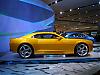
I think GM has done more to help by making cars now that people really want, than cutting labor costs...I know there's 2 GM vehicles I'm waiting for; a Camaro for me, the Buick Enclave for the wife.
Last edited by 90rocz; Mar 18, 2007 at 10:55 AM.

Thread
Thread Starter
Forum
Replies
Last Post
smackkk
Automotive News / Industry / Future Vehicle Discussion
1
Feb 13, 2004 10:34 PM
formula79
Automotive News / Industry / Future Vehicle Discussion
19
Sep 28, 2003 02:52 AM