


New Tundra 5.7L = 401 lb-ft


Registered User
Joined: Feb 2002
Posts: 2,428
What if the Tundra was cheaper, and was able to pull more, accerate faster while pulling more, etc?


Registered User
Joined: Jun 2001
Posts: 4,600
From: Pewee Valley, KY
Actually Threxx I am going to guess that the 4.7 will be the volume engine, at least for the 1st year. Toyota cannot allow ANY room for recalls or powertrain problems in the new Tundra, especially true for the top of the line powertrain that they are building their image on. I would expect that the 4.7 will be the only V8 available for quite a while so that Toyota can be sure all of the bugs are out of the other parts of the truck before they launch the 5.7. What will sell better and be more popular remains to be seen and the above is simply my opinion but it does make sense.

Registered User
Joined: Sep 1998
Posts: 4,320
From: Memphis
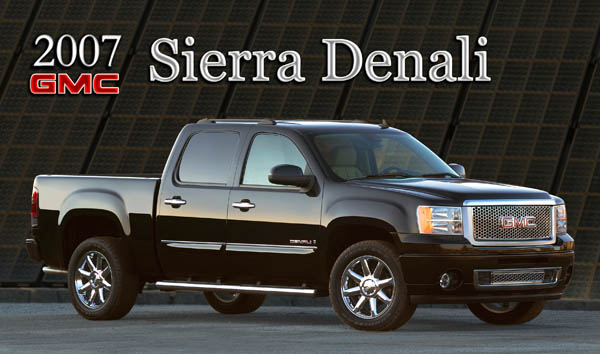
I think his question was rhetorical because the Tundra is far cheaper than the Sierra Denali and likely tows more and accelerates faster when in those cheaper (and lighter) configs.
I'm having flashbacks to the Silverado SS that used to get out accelerated, out towed, and out everything else'd by a Hemi Ram with a 23k sticker price, while it was wearing a 40k sticker price and only came more or less fully loaded, heavy as hell.
Granted at least this go round the 6.0 with a bit less power is still available in the 1/2-tons without all of the glitz and glamor, but I think the point was it doesn't make sense to compare a special V8 only found in the absolute top of the line fully loaded truck, to a competitor's V8 found in every variant of their truck... unless of course the buyer in question WANTS to go completely fully loaded no matter who's truck he goes with.
I'm having flashbacks to the Silverado SS that used to get out accelerated, out towed, and out everything else'd by a Hemi Ram with a 23k sticker price, while it was wearing a 40k sticker price and only came more or less fully loaded, heavy as hell.
Granted at least this go round the 6.0 with a bit less power is still available in the 1/2-tons without all of the glitz and glamor, but I think the point was it doesn't make sense to compare a special V8 only found in the absolute top of the line fully loaded truck, to a competitor's V8 found in every variant of their truck... unless of course the buyer in question WANTS to go completely fully loaded no matter who's truck he goes with.

Registered User
Joined: Apr 2006
Posts: 254
From: Wilmington, De
Toyota will be no threat. The only people who buy them will be current Toyota truck buyers upgrading. Look what happened with the Nissan. Great power, import reputation but crappy sales. Honda even worse because it wasn't even a real truck. GM sells more trucks in a month than Nissan can sell in a year. Truck buyers are the most brand loyal of any vehicle type. Toyota might be a great product but watch how many large construction companies, farmers etc. buy them. They will continue to buy their Fords, Chevy's and Dodges.

Thread Starter
Registered User
Joined: Aug 2002
Posts: 3,650
From: Indianapolis, IN
First off, where in hell did I say ANYTHING about Ford here??? I think we all know the engines that Ford has available to it at this time.
Next, I call a truck hideous............... but with a nice engine................. and I'm drinking the Toyota koolaid??? Allrightythen.
Just admit that the truck offers a few things that the GMT900's don't. It is also behind in a few areas. Its not that difficult.............. and noones manhood is threatened.
Maybe I missed this.............. but is the 6.0 with 380hp available on every configuration of Silverado??? Maybe its just me, but I thought it was only available on the Denali (someone please correct me if I am wrong............ so many engines, so many configurations).
PS, when everyone was debating the cylinder deactivation that was offered on the 5.3............... 1 mpg was a big deal.............. and now its not. Just one more of those things that make you go Hmmmmm..............
Next, I call a truck hideous............... but with a nice engine................. and I'm drinking the Toyota koolaid??? Allrightythen.
Just admit that the truck offers a few things that the GMT900's don't. It is also behind in a few areas. Its not that difficult.............. and noones manhood is threatened.
Maybe I missed this.............. but is the 6.0 with 380hp available on every configuration of Silverado??? Maybe its just me, but I thought it was only available on the Denali (someone please correct me if I am wrong............ so many engines, so many configurations).
PS, when everyone was debating the cylinder deactivation that was offered on the 5.3............... 1 mpg was a big deal.............. and now its not. Just one more of those things that make you go Hmmmmm..............
No one had (or still has, really) blasted the new Toyota engine. No question it makes impressive power and torque, about what I expected. It is a formidable engine, and I (and others) have said as much. But your very first post was to ask if anyone can just swallow their pride and admit it, as though we'd been laughing it off the whole time. I only teasingly brought up Ford because, well, you are known for being a supporter of Ford (which is fine by me). Given that truck engines are one area in which Ford is quite simply behind, I was jokingly implying that you were too quick to bow down to the Toyota engine simply because Ford doesn't have a gas V8 anywhere near 370-380 hp.
 No, I don't really think you are a Toyota Kool Aid drinker...
My basic take on it is this:
5.7L = impressive new engine, but not at all at a surprising level. It has a marketable but not overly significant advantage in power/torque over the 6.0L small block at this point. Which is why I said I hope the Max gets a little bump (or the 6.2L becomes available everywhere in its place).
6 speed auto = definite advantage, for the time being. Which is why I said the GM six speed needs to spread, and soon.
Fuel economy isn't that impressive, especially from the "green" leader, and with a brand new, "high tech" DOHC V8 and with a new six speed auto. It is certainly appropriate fuel economy for a full size pickup, but I had feared and half expected a truck with a 380 hp engine and a 2 or 3 mpg advantage over the competition. So the basic dead heat (and actually, if you look at all of the powertrain options, I think the GM trucks actually have an advantage overall in fuel economy) is a nice surprise. You'd have to think that at some point, if they want to push the big trucks toward a bigger slice of the market, people will start to catch on that Toyota isn't the benevolent green machine that they are too often perceived to be; they are a full line auto manufacturer, just like GM and Ford.
Registered User
Joined: Sep 1998
Posts: 4,320
From: Memphis
The question is - how much will it eat? Just a little? Or will it take a chunk out?


Registered User
Joined: Aug 2001
Posts: 2,400
From: Michigan's left coast
From the Toyota press release that we have posted on Autoblog:
It's interesting that a bore of only 3.7" (hardly any larger than Ford's Mod motor) is being used; that ultimately will limit the power output, even with 4-valve heads. GM always has the option of punching out the GenIV (of course as evidenced by the LS7).
For now, though, Toyota has shown the willingness and ability to be a serious player. I curiously await the reaction of the market.
i-Force 5.7 – A Force to be Reckoned With
The Tundra's trump card under the hood is an all-new 5.7-liter i-Force V8 that is available in every model configuration. Specifically designed for full-size pickup applications, the i-Force 5.7 uses a long-stroke configuration (stroke dimension of 4.02 in. is more than the bore width of 3.70 in.). As a result, in addition to its impressive 381 horsepower at 5,600 rpm, the i-Force 5.7 unleashes 401 lb.-ft of peak torque at 3,600 rpm.
Tundra 4x2 and 4x4 models equipped with the 5.7-liter engine will have city/highway fuel economy ratings of 16/20 mpg and 14/18 mpg, respectively.
The i-Force 5.7 V8 uses aluminum for the cylinder block and DOHC heads. This engine's more advanced Dual VVT-i controls valve timing and overlap on both the intake and exhaust valves, which also helps optimize power, fuel efficiency and emissions.
On all Tundra engines, the Acoustic Control Induction System (ACIS) uses butterfly valves inside intake manifold to switch the length of the intake tract in two stages, based on rpm and throttle angle, to improve torque across the engine speed range. Tubular stainless steel headers flow into a full stainless steel exhaust system with laser-welded, high-capacity mufflers for optimal efficiency and a commanding, powerful sound.
The i-Force 5.7 and 4.7 share a crank-hold electronic starter control that uses a "twist and release" ignition switch. The ECM controls the starter relay to prevent failed starts and "grinding" on a re-start attempt. Both the 5.7- and 4.7-liter Tundra engines meet the Ultra-Low Emissions Vehicle, or ULEV II, emissions certification.
The i-Force 5.7 is teamed exclusively with a new six-speed automatic transmission, which is only slightly larger than the five-speed automatic. Shift logic adapts the transmission's shift maps to driver input.
Both Tundra transmissions use new Toyota "WS" (world-standard) fluid with a flat viscosity/temperature curve (cold viscosity is close to warm viscosity). This fluid reduces friction and wear, enables faster vehicle warm-up, and never needs to be replaced.
Next year, select 2009 Tundra models equipped with the 5.7-liter V8 will offer flexible fuel capability with E85 ethanol.
The Tundra's trump card under the hood is an all-new 5.7-liter i-Force V8 that is available in every model configuration. Specifically designed for full-size pickup applications, the i-Force 5.7 uses a long-stroke configuration (stroke dimension of 4.02 in. is more than the bore width of 3.70 in.). As a result, in addition to its impressive 381 horsepower at 5,600 rpm, the i-Force 5.7 unleashes 401 lb.-ft of peak torque at 3,600 rpm.
Tundra 4x2 and 4x4 models equipped with the 5.7-liter engine will have city/highway fuel economy ratings of 16/20 mpg and 14/18 mpg, respectively.
The i-Force 5.7 V8 uses aluminum for the cylinder block and DOHC heads. This engine's more advanced Dual VVT-i controls valve timing and overlap on both the intake and exhaust valves, which also helps optimize power, fuel efficiency and emissions.
On all Tundra engines, the Acoustic Control Induction System (ACIS) uses butterfly valves inside intake manifold to switch the length of the intake tract in two stages, based on rpm and throttle angle, to improve torque across the engine speed range. Tubular stainless steel headers flow into a full stainless steel exhaust system with laser-welded, high-capacity mufflers for optimal efficiency and a commanding, powerful sound.
The i-Force 5.7 and 4.7 share a crank-hold electronic starter control that uses a "twist and release" ignition switch. The ECM controls the starter relay to prevent failed starts and "grinding" on a re-start attempt. Both the 5.7- and 4.7-liter Tundra engines meet the Ultra-Low Emissions Vehicle, or ULEV II, emissions certification.
The i-Force 5.7 is teamed exclusively with a new six-speed automatic transmission, which is only slightly larger than the five-speed automatic. Shift logic adapts the transmission's shift maps to driver input.
Both Tundra transmissions use new Toyota "WS" (world-standard) fluid with a flat viscosity/temperature curve (cold viscosity is close to warm viscosity). This fluid reduces friction and wear, enables faster vehicle warm-up, and never needs to be replaced.
Next year, select 2009 Tundra models equipped with the 5.7-liter V8 will offer flexible fuel capability with E85 ethanol.
For now, though, Toyota has shown the willingness and ability to be a serious player. I curiously await the reaction of the market.

Thread Starter
Registered User
Joined: Aug 2002
Posts: 3,650
From: Indianapolis, IN
BTW, www.toyota.com has the new Tundra info now.

Registered User
Joined: Jul 2002
Posts: 1,579
From: The Land of Pleasant Living
Not bad, I guess I should switch sides now..................NOT! Anyone think they will see ANY, bad press, for producing such gas-guzzlers!
Last edited by SCNGENNFTHGEN; Jan 8, 2007 at 01:55 PM.

Registered User
Joined: Jan 2000
Posts: 10,285
From: Albany, NY
The Toyota is ugly inside and out. Tundra Interiors look cheap compared to GM and Ford in higher end trucks, they layout looks bad too.
GMC Sierra is my favorite truck on the market now. Probably the best truck engine on the market is the DoD 5.3L from GM. Best mix of performance and economy and price, I can't wait until it gets mated to a 6 speed automatic though. No one will want a gas pig when $3 gas comes back