


TPI or CARB?


3rd Gen Tech Moderator
Joined: Jun 1999
Posts: 780
From: Orange County, CA
If you hate EFI then you should stick to carb cars and save the EFI cars for those of us willing to invest the intelligence required into them.
If you swap a carb or an intake manifold you still have to tune them, so dont think carbs are just plug and play.
We here in SoCal have made several street-legal and emissions-legal TPI setups that run 12 second ET's or faster, and get 20-25 MPG on the highway. Its not difficult, it just takes a little patience and knowledge to shorten the runners and open up the intake manifold to flow better. Stock TPI sucks, but the aftermarket TPI pieces can be made to flow better.
Finally, cats are required on all street-driven thirdgens in the United States. Its a federal law, even if your state or city doesnt check.
If you swap a carb or an intake manifold you still have to tune them, so dont think carbs are just plug and play.
We here in SoCal have made several street-legal and emissions-legal TPI setups that run 12 second ET's or faster, and get 20-25 MPG on the highway. Its not difficult, it just takes a little patience and knowledge to shorten the runners and open up the intake manifold to flow better. Stock TPI sucks, but the aftermarket TPI pieces can be made to flow better.
Finally, cats are required on all street-driven thirdgens in the United States. Its a federal law, even if your state or city doesnt check.

Registered User
Joined: Jun 2004
Posts: 151
From: Austin, TX
Ok, since you're asking for input ...
If you have a bad part on your TPI system, it will cost you a "steep" price of somewhere in the $10 to $50 range to replace it.
If you decide to revert 120 years to 1880's and put a carb on your engine, you are looking at over $1000.
We can only give you advice, the decision is ultimately yours, smart or otherwise. Not our call.
If you go to carb, you'll need to take control over several electrical systems that are currently supervised by the ECM. Fuel pump, cooling fans, TC lockup and A/C idle kick-up come in mind, I'm sure I missed something.
You will no longer need/have any emissions equipment which helps lower emissions and keep the air clean (no, I'm not a tree hugger ). You might fail inspection if your local laws require the engine to retain all OEM emissions equipment.
If you run the '730 ECM (SD TPI setup), your cruise control and speedometer will stop working, you'll need the "yellow buffer box" from a TBI car and do some wire splicing.
And since carbs are not self-tuning, expect to spend several hours trying to get it tuned right. Make sure you have good rubber/latex gloves, otherwise you'll be smelling like gasoline for days (because you'll need to take the carb apart a few times).
Btw, you will need an expensive wide band oxygen sensor (often referred to as WBO2), laptop and some software to tune the carb.
It's getting late and I gotta run but if I remember more details, I'll post them.
Lou
If you have a bad part on your TPI system, it will cost you a "steep" price of somewhere in the $10 to $50 range to replace it.
If you decide to revert 120 years to 1880's and put a carb on your engine, you are looking at over $1000.
We can only give you advice, the decision is ultimately yours, smart or otherwise. Not our call.
If you go to carb, you'll need to take control over several electrical systems that are currently supervised by the ECM. Fuel pump, cooling fans, TC lockup and A/C idle kick-up come in mind, I'm sure I missed something.
You will no longer need/have any emissions equipment which helps lower emissions and keep the air clean (no, I'm not a tree hugger
). You might fail inspection if your local laws require the engine to retain all OEM emissions equipment.If you run the '730 ECM (SD TPI setup), your cruise control and speedometer will stop working, you'll need the "yellow buffer box" from a TBI car and do some wire splicing.
And since carbs are not self-tuning, expect to spend several hours trying to get it tuned right. Make sure you have good rubber/latex gloves, otherwise you'll be smelling like gasoline for days (because you'll need to take the carb apart a few times).
Btw, you will need an expensive wide band oxygen sensor (often referred to as WBO2), laptop and some software to tune the carb.
It's getting late and I gotta run but if I remember more details, I'll post them.
Lou

Registered User
Joined: Sep 1999
Posts: 2,342
From: MI
Pro Systems Carbs sent my carb to me for $620 shipped and I never had to touch it. It idles, drives, and goes 140mph at the track, on the bottle, all in the same afternoon. My hands don't smell like fuel and my wideband revealed numbers that were close enough to make me smile.
Last edited by AutoRoc; Dec 2, 2009 at 05:34 PM.
3rd Gen Tech Moderator
Joined: Jun 1999
Posts: 780
From: Orange County, CA
Not everyone is that lucky, so congrats.
Most carbs need tuning such as primary and secondary jets, idle circuit, power valve adjustment, float level adjustment, needle and seat adjustment, etc.
Most carbs need tuning such as primary and secondary jets, idle circuit, power valve adjustment, float level adjustment, needle and seat adjustment, etc.
Registered User
Joined: Sep 1999
Posts: 2,342
From: MI
Um... fill out engine spec sheet, pay $600, wait a week = brand new custom carb.. How is that lucky? It's simple(for them) calculation that results in 99% customer satisfaction. It's literally paying LESS than retail for a stock HP carb and ALSO getting it tuned by the best carb builder in the world for free.
 Lucky is fresh milk after the expiration date.

Registered User
Joined: Jun 2001
Posts: 1,192
From: Hinesville, GA
I vote to just keep the car TPI. There are alot of naysayers out there, but the fact is, the vast majority of people really dont know. Most people attack the TPI with the same mentality as an engine with an untuned intake, and no knowledge of tuned intake characteristics. This means they dont know how to properly select parts or port the intake, and when it fails to deliver, the parts, not the person, are blamed.
First thing to understand is that 350 TPI's properly ported do NOT need an aftermarket base. The stocker actually has a better inlet CSA/exit CSA ratio in the base when ported for a 350 TPI which helps keep from weakening the tuning effect as the pressure pulse travels toward the cylinder head in the base. They do need bigger runners though on a 350 since the small ID of the tubes and their design create a choke point. A port geometry correction would help a great deal, though even aftermarket bases suffer from a poor port angle entry into the cylinder head not to mention the lack of a consistant CSA. The FIRST doesnt suffer as much from these problems though IMO it's too large for most engines under 400ci.
Next thing: TPI parts are NOT about max CFM, they are about efficiency. What makes a TPI perform is a properly sized, efficient intake with proper runner length and an exhaust to match, with minimal restrictions and obstructions to proper flow. You dont want monster ports or huge cams, you want an efficient, low restriction and properly sized port with a cam to match with peak torque RPM in mind. Keeping as much CSA consistancy as possible with a tuned port from plenum to valve helps significantly too. Tuned ports are about torque, which has a direct relationship to HP...maximize torque to get good HP figures. If you want HP, then yes, get another intake. The tuned port has an issue with high horsepower, yes, since the revs are so low at peak TQ, and you need to build revs to build HP, but like I said, HP is not what it was intended for, though it can get decent numbers at such a low RPM because of the volumetric efficiency.
I'll end it with this: if you want torque, do a TPI. If you dont mind loosing a little mileage and want to ditch the electronics or feel as if it's too complicated to make it perform, then yes, go carb for simplicity.
I've done many tuned ports in my time, and realize through trial and error, experience, and research that they are not to blame. They are performing as designed, and are often misunderstood and not properly used, though they do have some flaws that could use serious attention. With care and attention to detail, a TPI motor can be one hell of an engine.
Word of caution: stay away from ported parts. Also, just because a TPI intake worked well on a 350 does NOT mean it will work properly on a 383. In this example, the torque peak lowers, now requiring a longer runner length. In most (except SLP/Accel runners) situations, this is hard to impossible to correct properly for the average person. It will work, just not as good as it should.
First thing to understand is that 350 TPI's properly ported do NOT need an aftermarket base. The stocker actually has a better inlet CSA/exit CSA ratio in the base when ported for a 350 TPI which helps keep from weakening the tuning effect as the pressure pulse travels toward the cylinder head in the base. They do need bigger runners though on a 350 since the small ID of the tubes and their design create a choke point. A port geometry correction would help a great deal, though even aftermarket bases suffer from a poor port angle entry into the cylinder head not to mention the lack of a consistant CSA. The FIRST doesnt suffer as much from these problems though IMO it's too large for most engines under 400ci.
Next thing: TPI parts are NOT about max CFM, they are about efficiency. What makes a TPI perform is a properly sized, efficient intake with proper runner length and an exhaust to match, with minimal restrictions and obstructions to proper flow. You dont want monster ports or huge cams, you want an efficient, low restriction and properly sized port with a cam to match with peak torque RPM in mind. Keeping as much CSA consistancy as possible with a tuned port from plenum to valve helps significantly too. Tuned ports are about torque, which has a direct relationship to HP...maximize torque to get good HP figures. If you want HP, then yes, get another intake. The tuned port has an issue with high horsepower, yes, since the revs are so low at peak TQ, and you need to build revs to build HP, but like I said, HP is not what it was intended for, though it can get decent numbers at such a low RPM because of the volumetric efficiency.
I'll end it with this: if you want torque, do a TPI. If you dont mind loosing a little mileage and want to ditch the electronics or feel as if it's too complicated to make it perform, then yes, go carb for simplicity.
I've done many tuned ports in my time, and realize through trial and error, experience, and research that they are not to blame. They are performing as designed, and are often misunderstood and not properly used, though they do have some flaws that could use serious attention. With care and attention to detail, a TPI motor can be one hell of an engine.
Word of caution: stay away from ported parts. Also, just because a TPI intake worked well on a 350 does NOT mean it will work properly on a 383. In this example, the torque peak lowers, now requiring a longer runner length. In most (except SLP/Accel runners) situations, this is hard to impossible to correct properly for the average person. It will work, just not as good as it should.
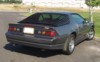
 I say butcher,butcher,butcher,makes mine worth more.
3rd Gen Tech Moderator
Joined: Jun 1999
Posts: 780
From: Orange County, CA
Um... fill out engine spec sheet, pay $600, wait a week = brand new custom carb.. How is that lucky? It's simple(for them) calculation that results in 99% customer satisfaction. It's literally paying LESS than retail for a stock HP carb and ALSO getting it tuned by the best carb builder in the world for free. Lucky is fresh milk after the expiration date.
Lucky is fresh milk after the expiration date. 
Thread
Thread Starter
Forum
Replies
Last Post